
The Moment You Notice It
You hit the button on your way out, and the door doesn't glide up the way it used to. There's a new groan from the opener, maybe a hesitation halfway up, or the chain rattles against the rail like it's working harder than it should. Or maybe you notice it going down: the door seems to pick up speed in the last foot and bangs onto the concrete instead of settling. None of that is normal, and none of it is really an opener problem, even though the opener is the thing making the noise. In most cases, it's a sign your garage door is out of balance.
What an Unbalanced Door Does to the Opener
A properly balanced garage door is counterweighted by its springs so that the door itself stays in place when the opener isn't involved. The opener's only job is to add a small push to get a balanced door moving. When the springs weaken or stretch, as cold winter metal and years of temperature swings will do here, the door stops carrying its own weight. The opener's motor and gears suddenly have to do real lifting, cycle after cycle.
That extra load shows up as early opener failure: worn gears, a stretched chain, a stripped drive screw, or a motor that burns out years before it should. It also puts more strain on the cables and the opener's mounting bracket. A door that's out of balance isn't just annoying, it's quietly shortening the life of everything connected to it.
Tools You'll Need
- A stepladder (for reaching the manual release cord)
- A flashlight
- Work gloves
- A second person is helpful, but not required
How to Test Garage Door Balance, Step by Step
- Close the door completely. Start from a fully closed position so you have a consistent baseline.
- Locate the manual release cord. This is the red-handled rope hanging from the opener trolley. Pulling it disconnects the door from the opener so you're testing the door and springs alone.
- Pull the release cord to disconnect the opener. You should hear or feel the trolley disengage. The door is now running on spring tension only.
- Lift the door by hand to about waist height. Go slowly and use both hands. Pay attention to how heavy it feels and whether it moves smoothly or catches.
- Let go and watch what happens. A properly balanced door will stay put, or drift down or up only an inch or two. It should not slam shut, shoot upward, or feel like it's fighting you.
- Test at a second position. Lower the door back down, then raise it to about shoulder height and let go again. Balance can be inconsistent along the track, especially with worn springs or a track that's slightly bent.
- Reconnect the opener. Pull the release cord again (or follow your opener's reconnect procedure) and run the door through a normal open-close cycle to confirm the trolley is engaged.
What the Results Mean
- Door stays roughly in place: Balance is good. Any opener noise is likely coming from something else, like a dry chain or loose hardware.
- Door drifts down slowly: Mild spring fatigue. Worth monitoring, but not an emergency yet.
- Door falls or slams: The springs have lost significant tension. This is a real safety issue, especially with the added force of a motorized opener trying to lift a door that's now much heavier than it was designed to handle.
- Door shoots upward on its own: Springs are over-tensioned, which is just as hard on the opener and hardware as a door that's too heavy.
What a Homeowner Can Do vs. What Needs a Technician
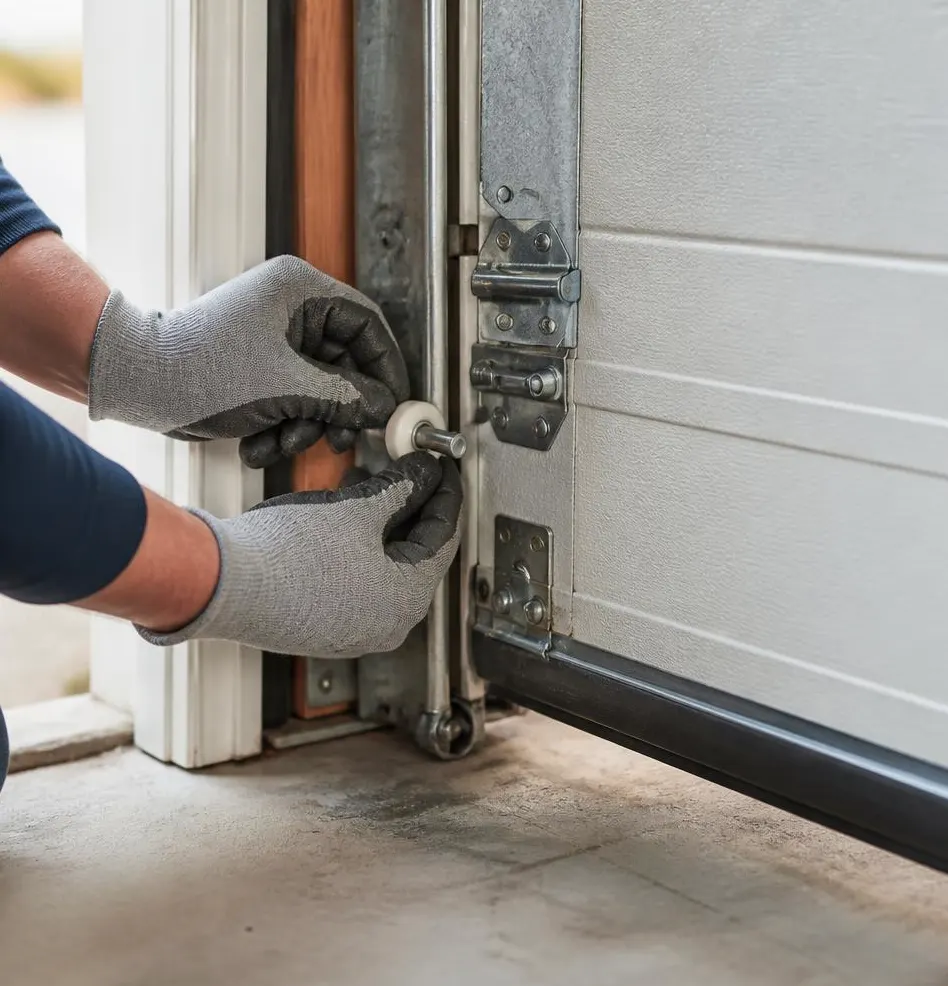
Running the balance test itself is safe and something any homeowner can do with basic tools and a few minutes. So is the follow-up visual check: looking at the springs above the door for visible gaps between coils, rust, or a spring that looks stretched compared to its neighbor. You can also check that the tracks are free of obvious dents, that the rollers aren't cracked, and that nothing is visibly loose at the bottom brackets.
What you should not do is attempt to adjust spring tension yourself. Garage door springs, especially torsion springs mounted above the door, are under extreme load and are tightened or loosened with winding bars in a specific sequence. This is one of the more dangerous DIY repairs in home maintenance, and it's not a place to improvise with the wrong tools or guesswork. If your test shows an imbalance, that's the line where the job shifts from homeowner task to technician job.
When to Call Hudsonville Garage Door Repair
If your balance test shows the door drifting, falling, or jumping, or if you've noticed the opener straining, chattering, or running longer than it used to, it's time to call. We'll check spring tension properly, inspect the cables and rollers for wear that often shows up alongside balance issues, and handle spring replacement safely with the right equipment. If the opener has already taken damage from months of overwork, like a stripped gear or a chain that's jumped the sprocket, we can diagnose and repair that too rather than just replacing a part that was never the real problem. With the deep cold of a West Michigan winter coming on, now is a smart time to get ahead of it, before salt, ice, and sub-zero mornings put extra stress on a door that's already working harder than it should.
If something felt off during your test, give Hudsonville Garage Door Repair a call. We serve homes and businesses throughout Hudsonville, MI and the surrounding area, and we'll get your door back in balance before winter makes a small problem a lot worse.