
What We See on a Typical Call
The call usually comes in the morning after a storm knocked the power out overnight. One spouse is standing in the garage pulling the emergency release cord, trying to lift a 150-pound door by hand so someone can get to work. The other spouse is inside saying, "I thought we paid extra for the battery thing so this wouldn't happen." That's the moment we get the call — and it's usually followed by an argument about whether the opener even has a battery backup, whether it's supposed to work during an outage, and whether it's something required by code or just a nice extra. Here's the answer, in plain terms, so you can settle it without us.
How Battery Backup Actually Works
A battery backup is a small battery pack, either built into the opener's motor head or added on as a separate unit mounted nearby. Under normal conditions it sits there doing nothing except trickle-charging off your home's power. The moment that power cuts out, the backup switches on automatically and runs the opener using stored battery power instead.
It doesn't run forever. Most units are rated for a limited number of open-close cycles before the battery drains — often somewhere in the range of 10 to 20 cycles depending on the model and how old the battery is. You'll usually notice the door moving a little slower on battery power than it does on normal household current, which is normal and not a sign anything is broken.
Is It Required?
There's no blanket rule that every garage door opener has to have battery backup. It's not something inspectors are checking for on existing homes, and it's not a feature you're legally obligated to add. What has changed is that many newer openers now come with it built in standard, simply because manufacturers have made it a default feature rather than an upsell. So if you bought an opener in the last several years, there's a decent chance you already have one and don't realize it. If your opener is older, it almost certainly does not, and adding one would mean either installing a compatible add-on battery module or replacing the opener itself.
Why It Matters More Here Than in Some Places
This is the part worth bringing up in the argument. West Michigan winters bring ice storms that can take down power lines for hours, sometimes longer, and that's exactly when you don't want to be stuck wrestling a frozen, heavy door open by hand in the driveway. Summer isn't off the hook either — the humid storm season here brings wind events that knock out power just as unpredictably.
A battery backup means that when the power goes out, you can still open the door normally from the wall button or remote, get the car out, and close it again behind you, instead of relying on the manual release. That matters even more if anyone in the house has mobility limitations, if you've got a detached garage you rely on for storage access, or if the household includes someone who needs to leave for work or medical reasons regardless of what the power company is doing.
Where the Trade-offs Are
- Cost: openers with battery backup built in typically run higher than base models, and retrofitting an add-on battery to an existing opener costs less than replacing the whole unit but still isn't free.
- Battery life: the backup battery itself wears out over time, usually needing replacement every couple of years, and a dead backup battery gives you a false sense of security until the day you actually need it.
- Compatibility: older screw-drive and chain-drive openers may not support an add-on battery at all, meaning the only real option is replacing the opener.
- It's not a generator: battery backup runs the opener, not your whole garage. Lights, outlets, and other garage circuits stay dark during an outage.
If You Already Have One, Test It
Don't assume it works just because it's there. Unplug the opener at the wall for a minute during a routine check and see if the battery kicks in and runs the door. If nothing happens, the battery may be dead, miswired, or past its service life, which means it would fail you at exactly the moment you need it most.
When to Call Hudsonville Garage Door Repair
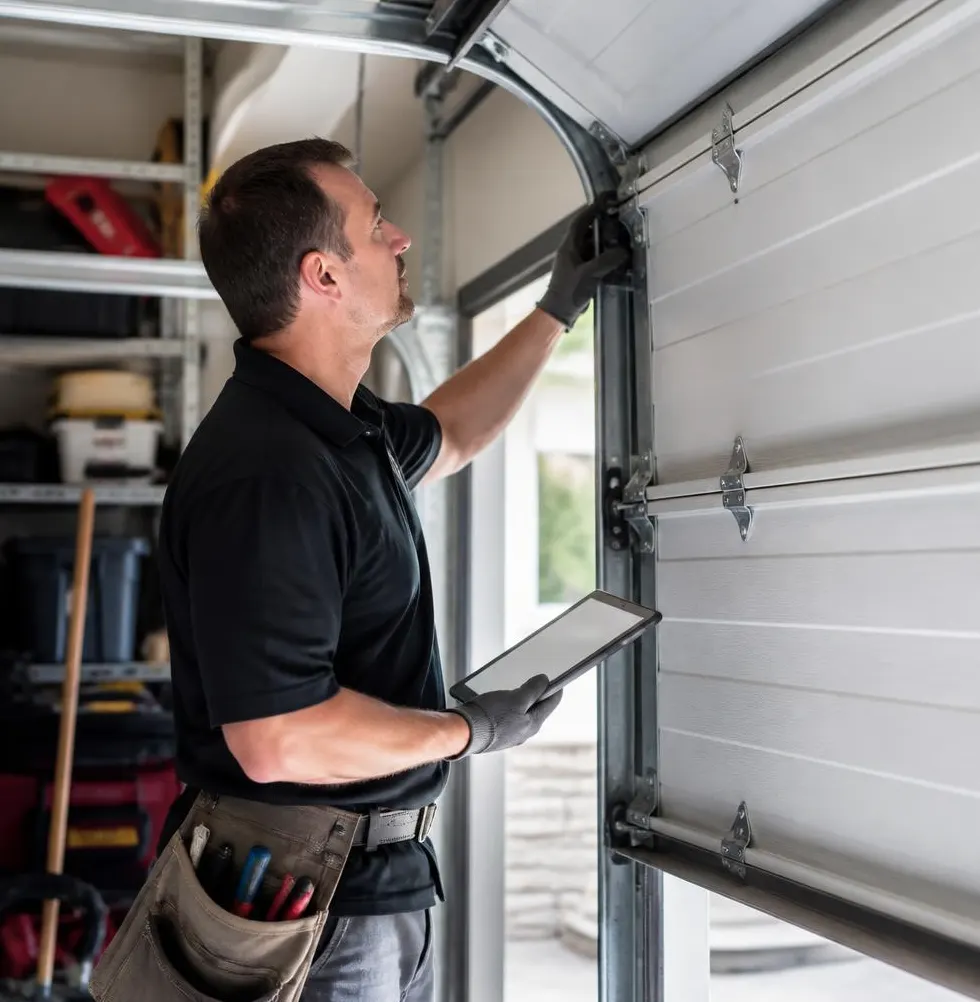
If you're not sure whether your opener has battery backup, if you've tested it and it didn't kick in, or if you're ready to add one to an older unit, that's exactly what our Opener Repair & Installation service covers. We'll check what you have, tell you honestly whether an add-on battery will work with your current opener or whether replacement makes more sense, and get it installed correctly. We also check backup batteries as part of our Maintenance & Tune-Ups, so it's not something you find out has failed during the next ice storm.
If you're in Hudsonville, Jenison, Zeeland, Grandville, Allendale, Byron Center, Holland, or Wyoming and want your opener checked before winter weather hits, give Hudsonville Garage Door Repair a call. We'll settle the argument for you.